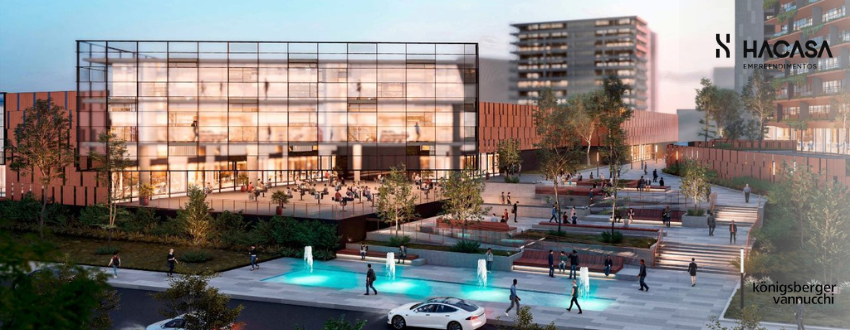
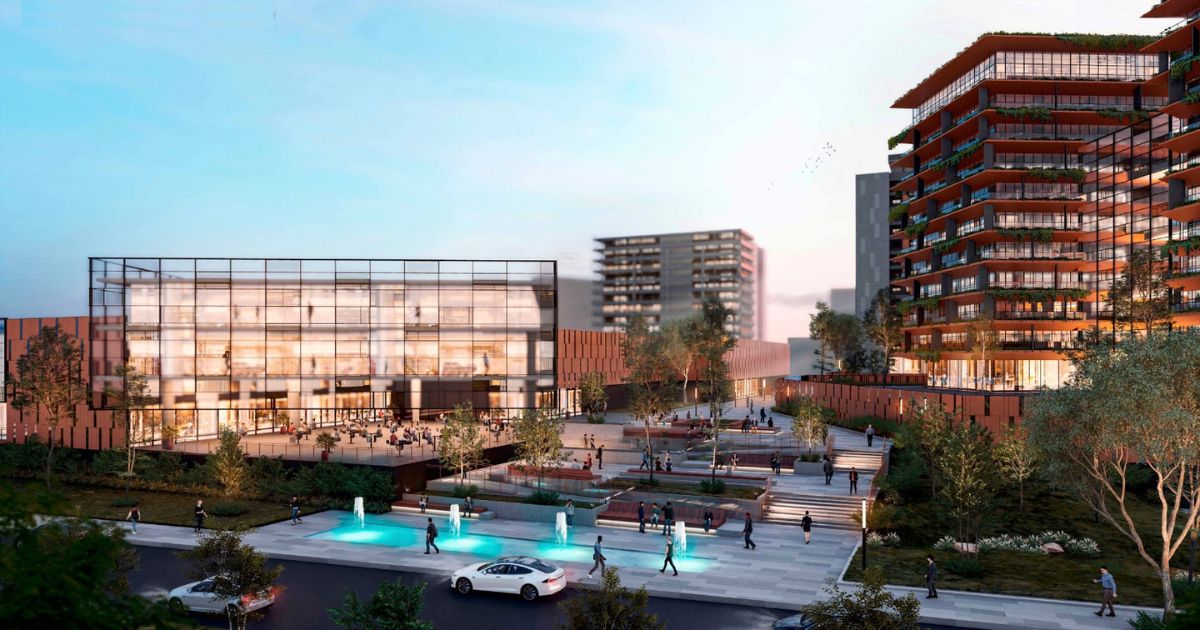
Sustainability of multi-use complex designed for an area in Joinville (SC) is highlighted at an architecture festival in France.


The project is a collaboration between Hacasa and the Königsberger Vannucchi architecture firm, with a site study conducted by Urban Systems.
The conscious use of natural resources and the reduction of the environmental impact of the real estate and construction industry are essential concerns in any project, especially those involving large areas. This environmental care, combined with technology and functionality, are some of the highlights of the project to be developed in the center of Joinville (SC).

The project is a multi-use residential, commercial, and corporate complex in the city of Joinville, Santa Catarina, developed by Hacasa Empreendimentos in partnership with the Königsberger Vannucchi architecture firm. Its unique characteristics, particularly regarding sustainability and environmental impact, led the urban planning project to become one of four Brazilian projects selected to be presented at the World Festival of Architecture in International Public Interest (MIPIM), which took place at the Palais des Festivals in Cannes, France, from March 14th to 16th of this year.
The Study
According to Fabiano Cordaro, general superintendent of Hacasa, in 2020, at the beginning of his time at the company, it became clear that there were well-located, valuable areas available to the group. “That's when I contacted Urban Systems for a vocational study of these locations,” he explains.
Based on the study, Urban Systems recommended a mixed-use complex for the HACASA area in downtown Joinville. In addition to studying the area's potential, Urban Systems structured the ideal products according to supply and demand, and carried out a sizing of existing and future demand, as well as a market risk analysis, also determining the phasing and priorities of the project. “The mixed-use recommendation was something new for us, as we were used to single-use projects. The architecture firm Königsberger Vannucchi (KV) was responsible for the Masterplan.”
Cordaro explained that the Urban Systems study provided the insights they needed to create a unique and up-to-date project, reducing investment risk. “The study helped us avoid the temptation to create a product based on the current moment or on other past experiences. A certain product may have high demand in a given cycle, as the real estate market is cyclical. So, if we develop a product that is currently booming and base the entire project on that single product, it would be very risky.”
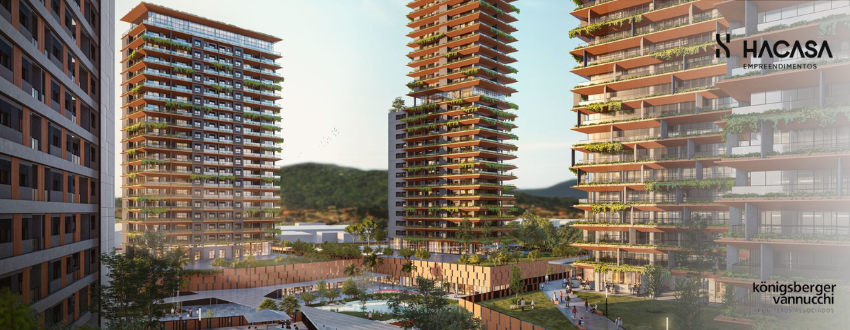
Based on a study conducted by Urban Systems, the company received a recommendation to develop a mixed-use project where the area could be better utilized in terms of both community life and product quality, as well as, of course, demand absorption. “It’s a very large and well-located area, which allows residents to feel like they are in a quiet, secluded neighborhood, yet they will be close to the city center.”
According to Cordaro, the project features a mix of an open-air shopping mall alongside a gallery and a supermarket in an area of 60,000 m². “Normally, in smaller cities there are enclosed shopping malls or galleries on the streets; in this complex we will have all the options.”
Presentation in Cannes
The luxurious city of Cannes, on the French Riviera, hosted MIPIM (in French, Le Marché International des Professionnels de L’immobilier), a global real estate market event. The 2023 event took place from March 12th to 15th.
The masterplan for the mixed-use complex was developed by the architecture firm Königsberger Vannucchi (KV), in partnership with Hacasa Empreendimentos, and was one of four Brazilian projects selected for the event, which brings together investors from over 90 countries.

Fabiano explained that, during the event, it became clear that concern for sustainability and reducing the environmental impact of developments is no longer just an international trend, but a requirement. “We were nominated by AsBEA (Brazilian Association of Architecture Offices) and Apex Brasil (Brazilian Trade and Investment Promotion Agency). I confess we didn't expect to be nominated, but the nomination proved the scale and relevance of our project, which has 80,000 m² of sales area and 160,000 m² of construction – a well-conceived and very complete project. It's a very gratifying feeling, both for us and for Urban Systems, which gave us the insights.”
“Other companies also participated in the event, with their respective projects, each with its own attractive features, all very well-developed. One of the things that most impressed the participants was, in addition to the rainwater treatment, the fact that the project is net zero,” he concluded. For those unfamiliar with the term, Net Zero refers to a commitment to reducing greenhouse gas emissions into the atmosphere. The full expression is net zero carbon emissions.
He explained that 100% of the carbon emitted during the development of the project will be offset by the preservation of forests. According to Cordaro, the Hacasa group launched the “Metro Verde (Mv)” project to offset the impact of the construction industry on the environment through the preservation of Atlantic Forest.
The Mv project stipulates that for every square meter built, an equivalent amount of native forest area in the northern region of Santa Catarina will be preserved for a minimum period of ten years, guaranteeing the capture of carbon dioxide generated in the industrial construction process. “The Metro Verde program will be implemented in all future Hacasa projects. It is a company commitment.”
About Hacasa
Hacasa was founded in 1983 by the H. Carlos Schneider Group to manage its real estate properties and, over the years, has also become a real estate developer, responsible for the development of diverse real estate projects such as shopping centers, hypermarkets, hotels, subdivisions, and condominiums in various regions of the country, with its headquarters in the city of Joinville, Santa Catarina.
The history of the H. Carlos Schneider Group begins with the founding of Casa do Aço (House of Steel) in 1881. The acceptance of the products and the growth rate of the national market stimulated the creation, in December 1968, of an independent company, Cia. Industrial H. Carlos Schneider, later named CISER. Currently, the group brings together six nationally representative companies in various segments: CISER Parafusos e Porcas (Screws and Nuts), CISER Automotive, Hacasa Empreendimentos Imobiliários (Hacasa Real Estate Developments), Intercargo Transportes (Intercargo Transport), RBE Energia (RBE Energy), and Agropecuária Parati (Parati Agribusiness). Furthermore, it also has an entity that organizes and strengthens the social actions developed by the group, the ITHIO Institute.

Fontes: